Observations Archives - Page 5 of 6 - Wootcrisp
 

Category: Observations

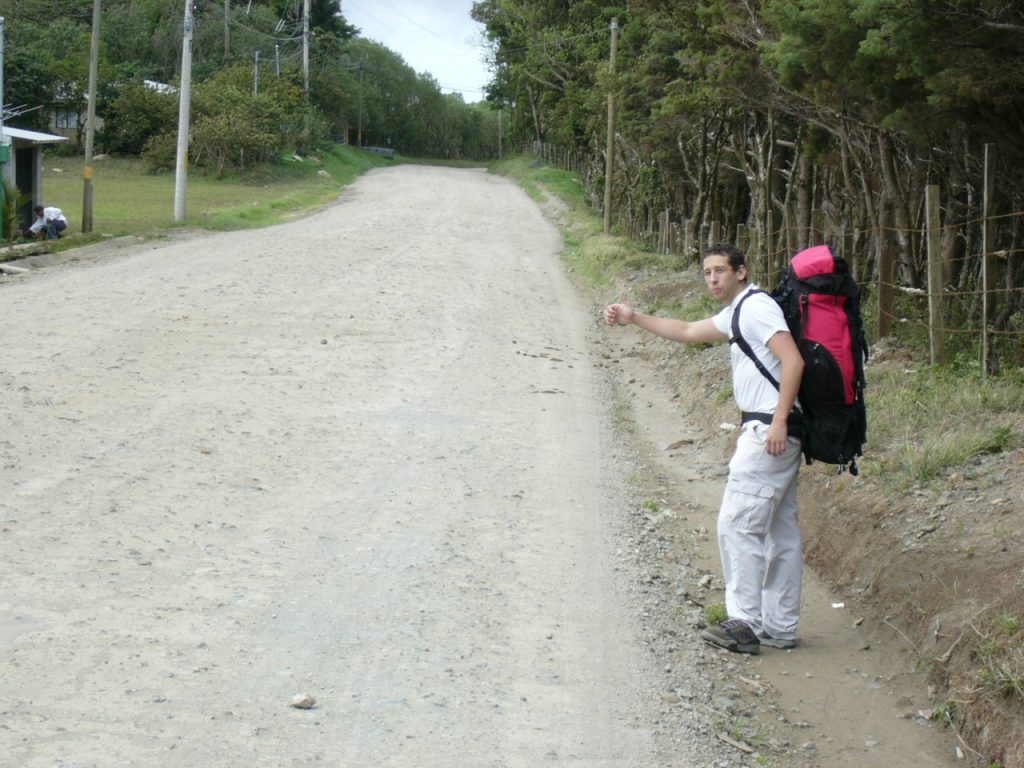
I am traveling to Mexico for a few months, and the near constant media coverage of the violence here eventually led me to start thinking more seriously about safety. What started as a passing attempt to reassure friends and family that there was little reason to worry, reminded me of the actual interest I have in the topics of adventure travel and communication secrecy. In my early twenties for example, I hitchhiked around several countries in Central America, without knowing any Spanish, comforted, naively, by the two machetes protruding from out my backpack.
As a teenager, I thoroughly enjoyed Robert Young Pelton’s “The World’s Most Dangerous Places” which includes a good chapter on kidnapping related issues, but looking on it now, the information feels like it could use a bit of an update. At the time it was published, Mexico, evidently, trailed only Columbia in terms of kidnappings,
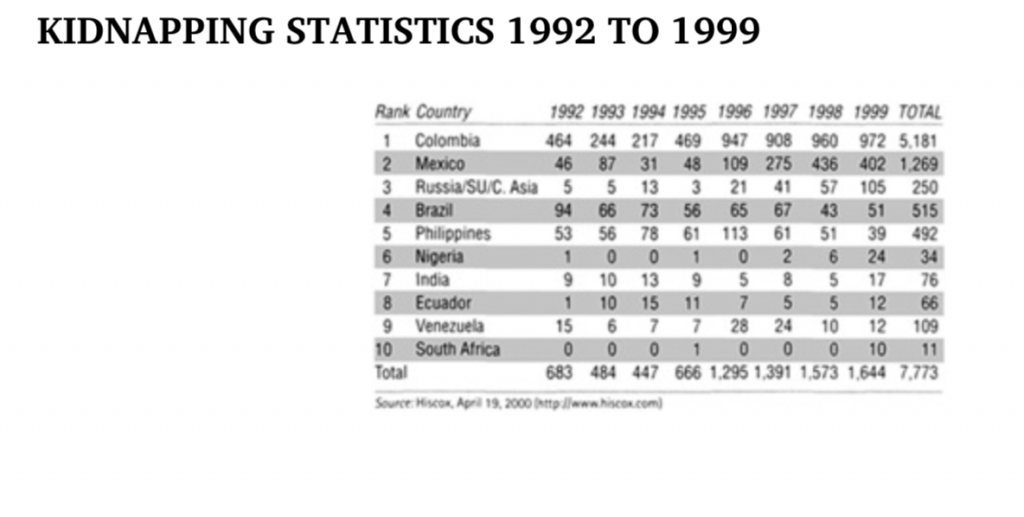
yet these more recent statistics show my home country of Canada as much further ahead: 
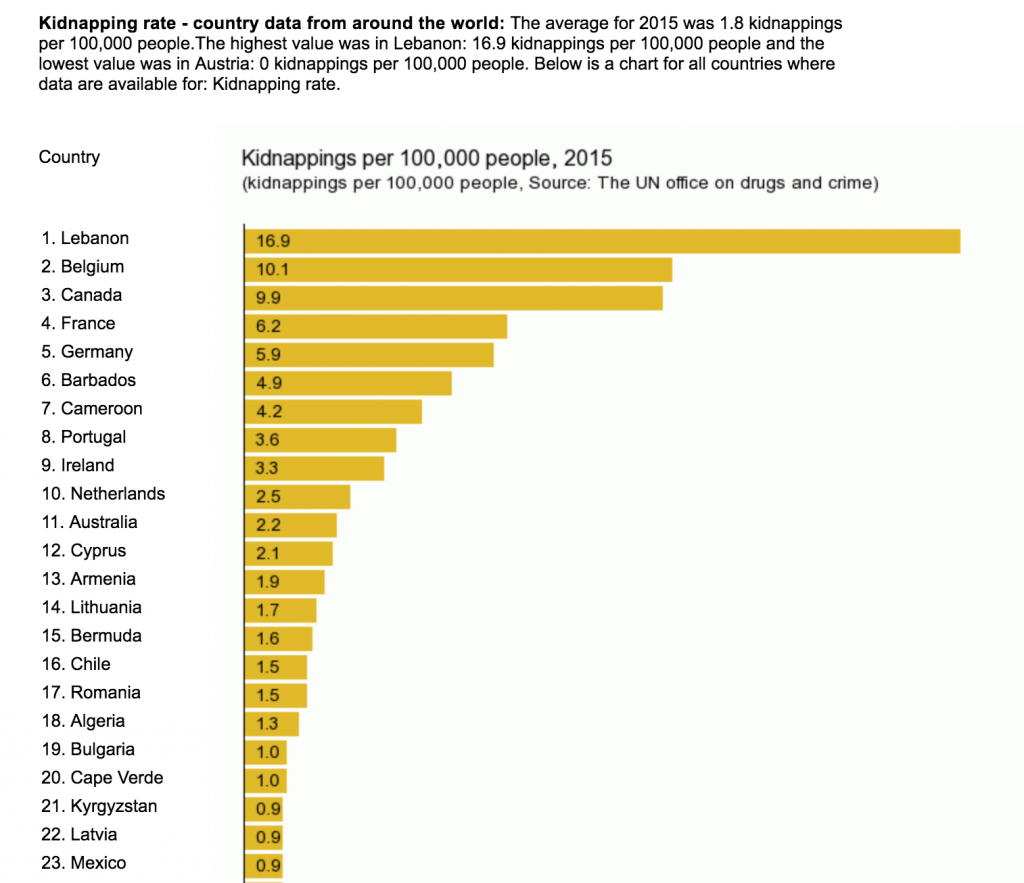
I honestly don’t know how this is possible, and it must have something to do with the methodological differences between the “Hiscox” rankings used in the former, and the latter’s UN sourced rankings. It’s hard to know what the actual risks are for a penniless homebody like myself but I nonetheless began to write out some strategies for communicating with friends and family in the event that I find myself in danger.  Some brief Googling revealed a paucity of articles that could help the casual traveller develop such strategies. So here is what I’ve thought about so far, though I would be curious to hear the suggestions that others might have in the comments.

  1. Agree on a strategy with trusted friends and family in advance.
  2. Keep location updated using a real time GPS tracking device or cell phone based GPS logger, and share the map with trusted contacts.
  3. Communicate using variations of names, places, contact information, and contact sequences. Examples:
    • Referring to your brother Jon as Jonathon could mean “duress = low”.
    • First contact made by emailing [email protected] could mean “location = unknown”.
  4. It is much easier to remember a location using what3words than it is to remember a GPS coordinate. These words will encode any location on earth within 3m2. For example, “skirt,shopper,computer“. How you would know these words and not be able to email for help, is a separate question.
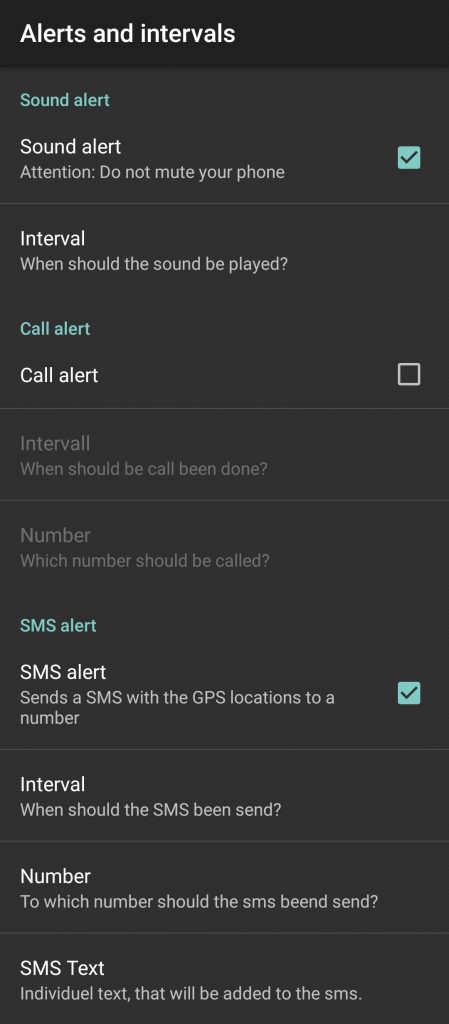
  5. Phone apps that act as “dead man’s switches” can be used to trigger SMS messages containing notes and GPS coordinates, in the event that a notification is not responded to. The app I’ve been using was simple enough to setup and works as it should, so long as the phone doesn’t go to sleep (see edit at bottom). An SMS message to a private security firm could instruct them to send a car to that location for a small fee. 
As partially complete as this list is, the story doesn’t end just yet. The glib imagination of much modern sci-fi – evident in shows like Black Mirror and the horrifying psychological tortures used by the Klingons in the first season of Star Trek Discovery – led me to some of the academic literature on, what I can only refer to as, “mental secrecy”.  This “Ridealong” I recorded last year, looks at a paper by Ravi2007 that reports the use of an event-related potential (ERP) extracted from the EEG of an individual’s idiosyncratic electroencephalogram (EEG) in response to a simple visual stimulus. 

What differentiates this paper from other biometric cryptography methods in my view, is that the individual’s unique ERP used as the cryptographic key comprises averages from 61 electrode channels, which I have to think would be quite different when generated from a halcyon versus duressed state of mind. What this could mean then, is that your mind could store secrets that are only accessible if you don’t feel coerced. Maybe. If so, I think the ramifications are pretty obvious in the current context, and truly spectacular as a source of future ideas.

edit1: I’ve just come across a new article on this topic that I look forward to checking out: 

Lin, F., Cho, K. W., Song, C., Xu, W., & Jin, Z. (2018). Brain Password. Proceedings of the 16th Annual International Conference on Mobile Systems, Applications, and Services – MobiSys ’18, 296–309. http://doi.org/10.1145/3210240.3210344

edit2: It took a while to figure out where this setting was stored: Apps & Notifications >> Apps >> Settings >> Special access >> Ignore battery optimization >> set apps you want don’t want “dozed” by Android’s sleep function, to “Allowed”.

Cybernetics

| Leave a comment


I have a real soft spot for the field of study called “Cybernetics”. I was reminded of this today by a popular Reddit thread linking a well-intentioned, but poorly executed, film called “The Choice is Ours“. I didn’t watch it all, and am instead using this an opportunity to link one of my favourite documentaries: “All Watched Over by Machines of Loving Grace – Episode 2 – The Use and Abuse of Vegetational Concepts“, written and directed by Adam Curtis. There are many many many fascinating things to learn from the Curtis documentary, and I would encourage absolutely everyone to watch it, but I’d like to add a few of my own thoughts about Cybernetics as well. 

In all my years at university I never once saw a course in Cybernetics offered. It wasn’t until I started trying to model human eye movements that I was able to develop a really deep appreciation for this field.  Some of the most important papers I read in graduate school were published in a relatively obscure journal called “Biological Cybernetics“. It was here for instance, that the enigmatic Shun-ichi Amari published his seminal paper that later became a cornerstone of the Dynamic Field Theory based modeling that it is I do. Amari lit up my imagination with all kinds of curiously titled, yet often totally impenetrable, papers. One day I will read and try to understand The Information Geometry of Turbo Codes, but for now I will simply say that it is satisfying that some of my academic work has managed to intersect with another interest I’ve long had in self-organizing workplaces.

Cybernetics is very concerned with the concept of “feedback”. This is a topic serendipitously on my mind, as I’m editing some papers I wrote for my comprehensives, and am just at a section discussing the differences between “unsupervised” and “supervised” learning. All that really needs to be said about that, is that feedback can really change how we learn about things, for the better or worse, and some things cannot be learned without it. 

For many years my bathroom has been haunted by an old copy of Stafford Beer’s “The Brain of the Firm“. I never did finish this book, which details the “Viable system model” developed to manage the economic input and outputs for the tragically short-lived Allende government in Chile. This is work that is all but forgotten in the halls of academia, yet these are ideas whose time may have finally come, manifest as cryptocurrencies like IOTA. I have a similar affinity for the eccentric, but inspiring, Buckminster Fuller, to whom to we owe the popularity of geodesic domes. I do hope that Cybernetics rises again in academia.

[iframe src="https://www.bitchute.com/embed/5OrwUd0nNJlk/" width="100%" height="500"]

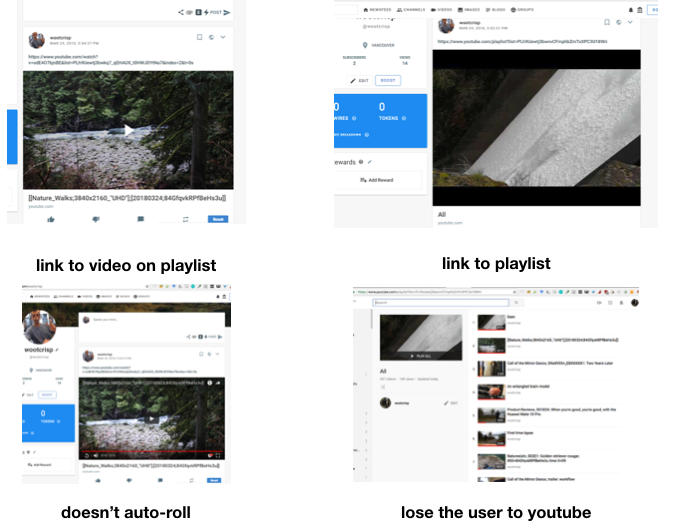
After recently watching this video on “dark” design patterns, I thought I’d describe the experience of embedding YouTube playlists on Minds.com.  Notice that this playlist below works as it should:

YouTube player

One video rolls into another on the Nature Walks playlist. Not so when I try and embed this playlist to my Wootcrisp page on Minds.com:

What does it mean? Unless it’s an innocent programming issue, Minds and/or YouTube is doing this to incentivize their video platform. A cursory Google search turned up no obvious way to detect which of them was the problem, but testing the playlist here shows that it is at least possible. 

edit:

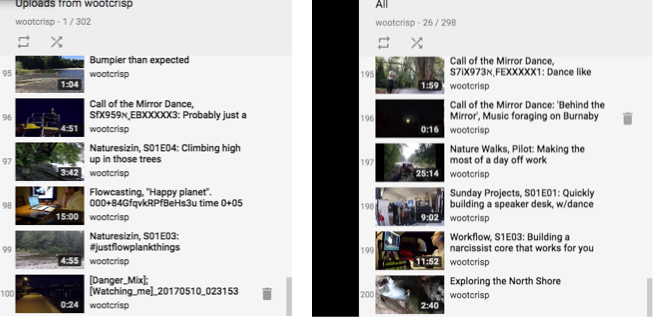
  • Also, at the time of writing this, YouTube will only display 200 videos under a user’s upload playlist before requiring that you click the 200th video, and only 100 on any given playlist:

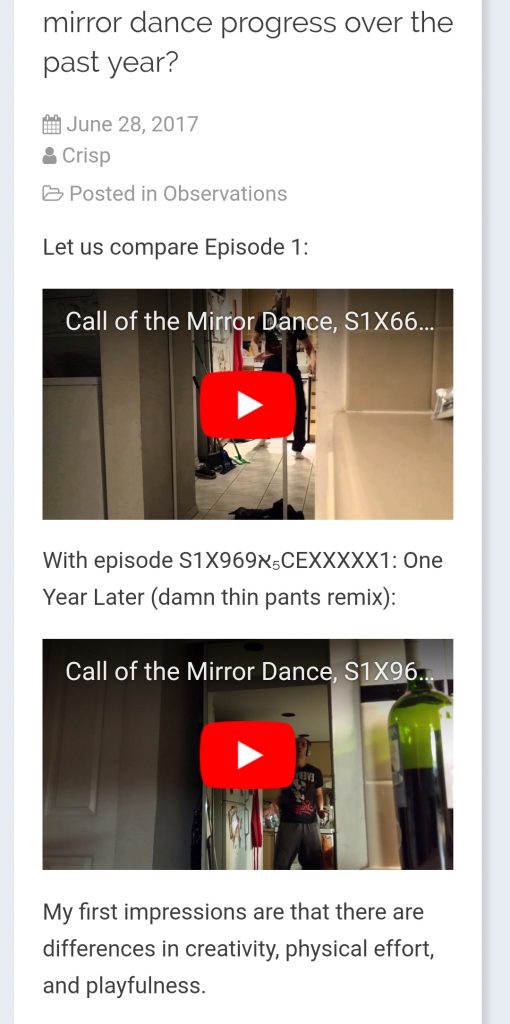
A year ago I compared my progress with Call of the Mirror Dance between two videos after a year of dancing. I judged the dancing to be no better or worse, just different: 

This year I went with a shorter video than the previous years:

I find this video less inspired but of about the same technical level. 

Stellasers

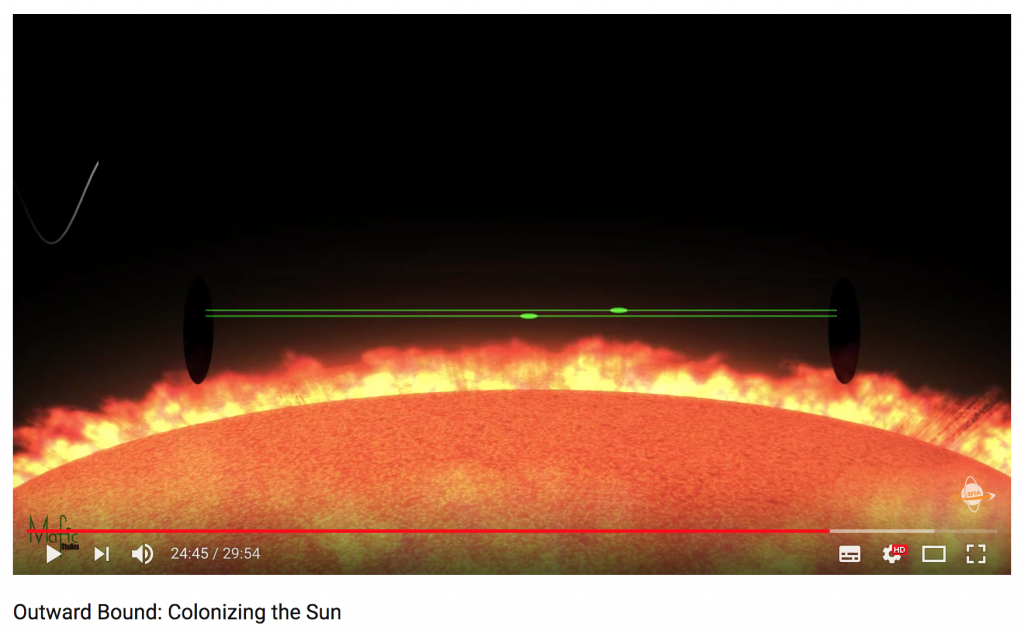
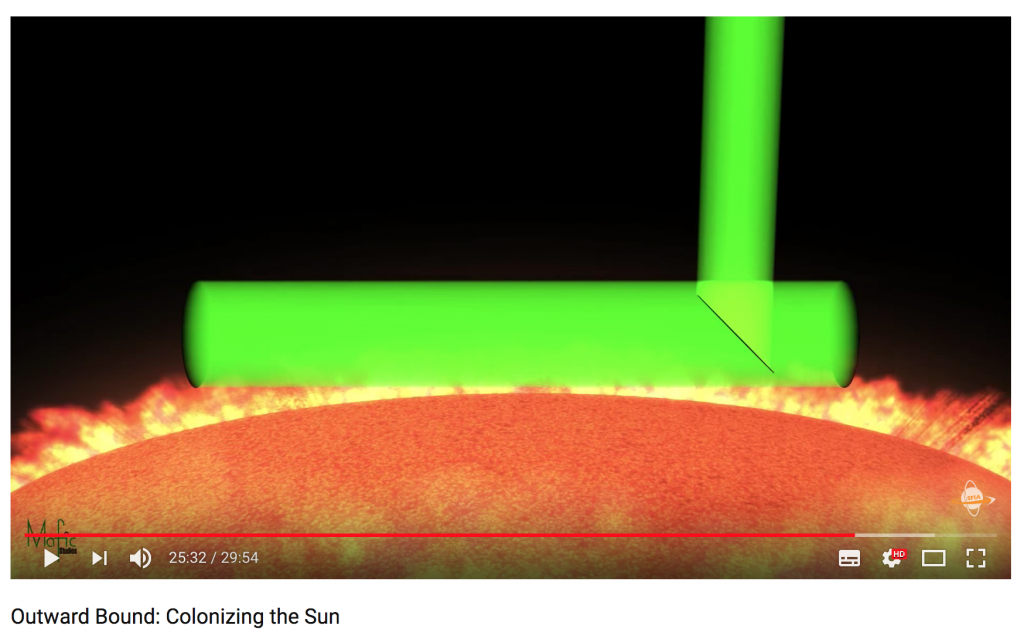
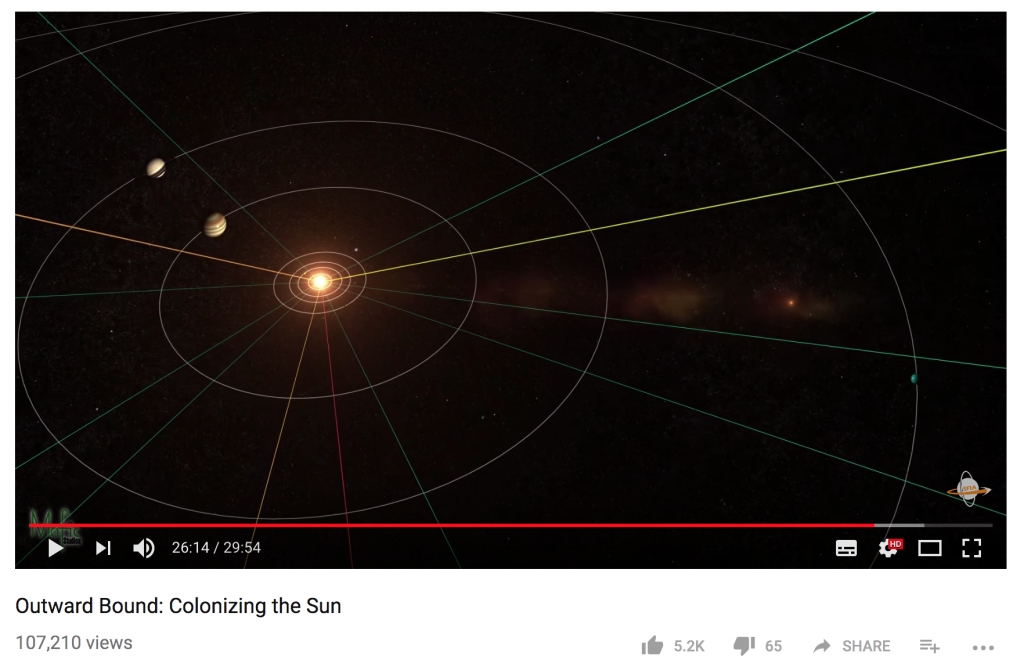
Isaac Arthur discussed “stellasers” in a recent episode called “Colonizing the sun”. These stellasers are large mirrors for trapping solar light and beaming the trapped light like a laser to push on spacecraft we might want to send abroad. Why not send information signals to stars that are likely to have planets? If there’s a better way to send VR surrogates across intergalactic space, I’m all ears. Maybe once having signalled these likely places you start to receive a whole bunch of new signals from closer stars that didn’t know you were in the game? Information could be multiplexed across solar relay points between our sun and more distant stars using a kind of population-coded routing system that differentially prioritizes components of the signals to be sent. We could for instance separately build a stellaser for blue/green/red wavelengths of light, that fires these colours into distinct relay pathways that bend toward your solar direction to better accommodate that wavelength of light from your direction. Actually, I’d like to know if separating bands of light increases each band’s probability of having some photons (noise around c) arrive faster than c. Red light travels faster than blue light in mediums other than the vacuum. I wonder if that could be built on?


For Mac users, I’ve got a hotkey that’s worth sharing: command+shift+4.

Years ago I set my print screen hotkey to fn+F12, which was basically fine for most things, though I would often have to crop the saved file because it grabbed the entire screen. This became much more irritating as the number of monitors I was using increased, as it would save a separate file for each display. As a stop gap I started using the grab application manually, which was annoying because I would 1. have to open that app, and 2. have to cmd+s and write a filename for the screenshot. This bugged the hell out of me and really made me rethink each screenshot I did.

A few days ago I found command+shift+4 and I was almost reluctant to share it because it seemed so unfair to go through such agony for so long and give away the prize. But you see how nice I am?

Also, the joint key press indicated by “+” symbol is how to think of unicode commands, like “U+052A” that produce “Ԫ”. But that’s a bit more involved.

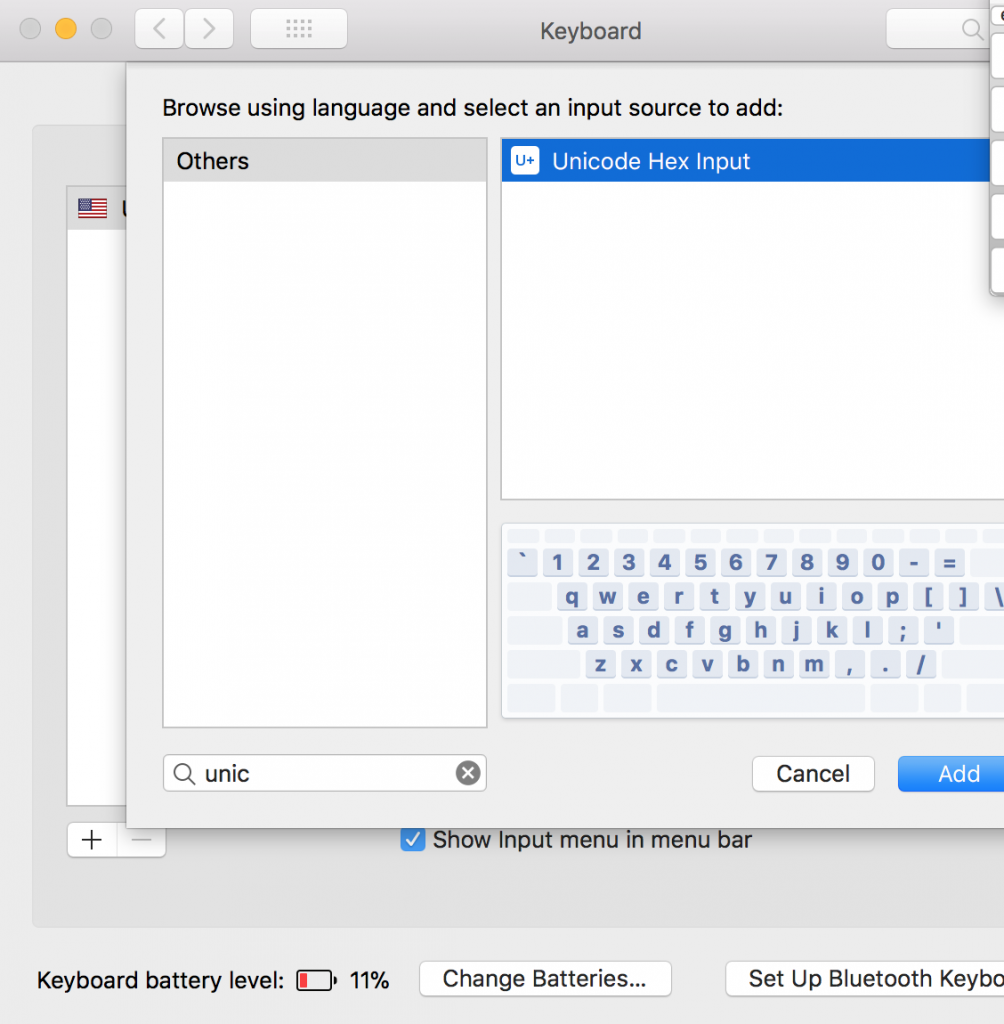
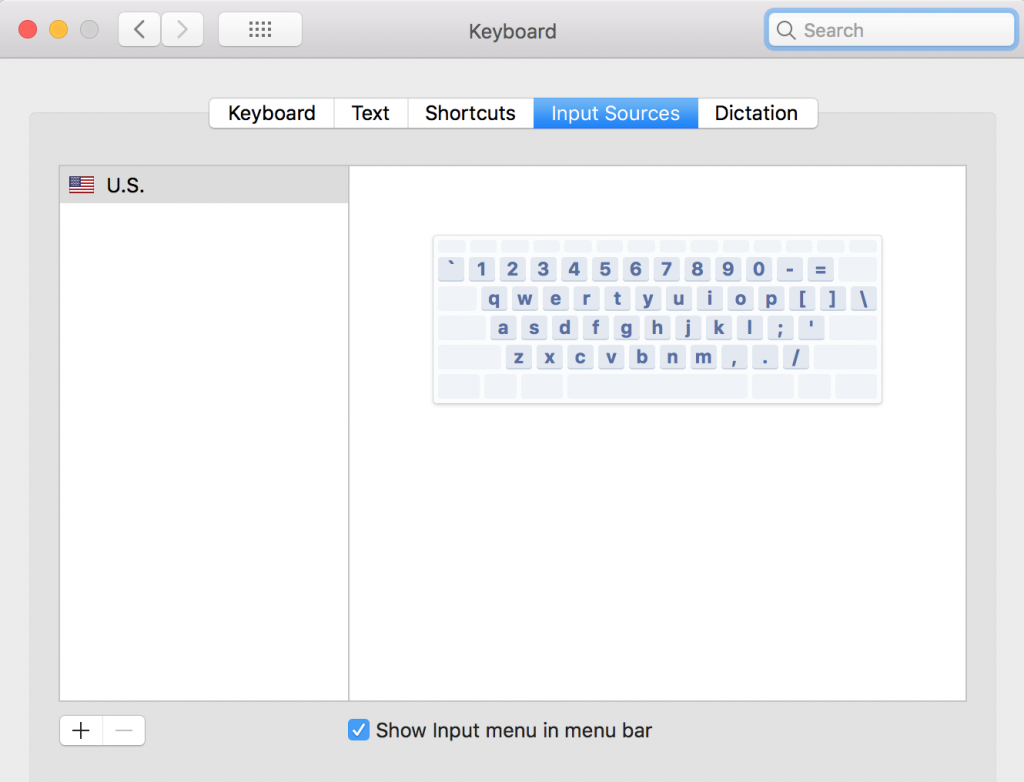
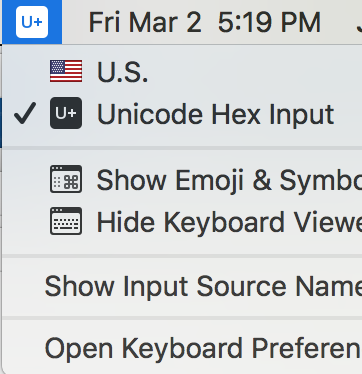
On Mac you must activate “unicode hex input” in your keyboard settings. This is a nuisance but it will open the wide world of unicode to you:

https://unicode-table.com/en/#basic-latin

First, to read it: when you see “U+052A = Ԫ” what it means is pressing option+[0→5→2→a].

If you’re using a Mac, notice that doesn’t work, and you instead end up with “º∞™å” in your text editor. You need to enable “unicode hex input” and switch to it.

Here are pictures that cut to the chase of what is written here http://poynton.ca/notes/misc/mac-unicode-hex-input.html

1. 

2.

3.

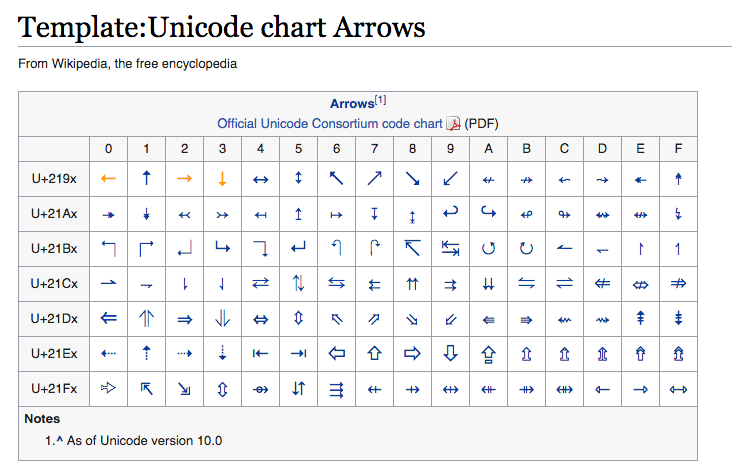
Look at how nice it was to learn about arrow characters for the → characters above: